Stainless Steel Glass Supports: A Complete Hardware Guide for Contractors
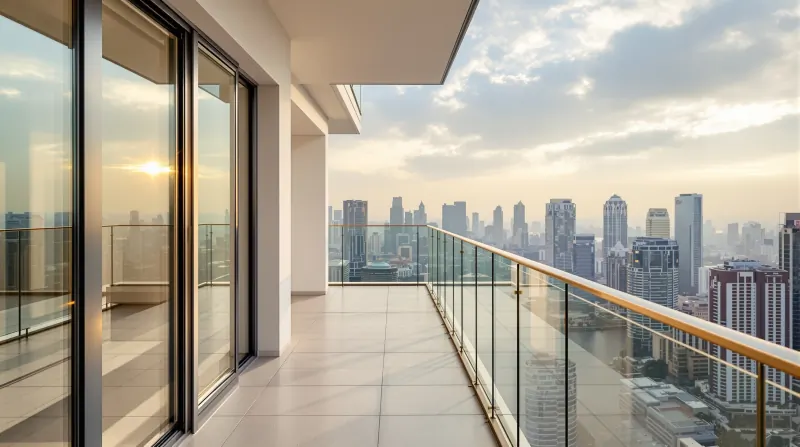
Stainless steel hardware is the invisible backbone of every frameless glass installation. Whether you are fitting a glass balustrade on a Sentosa Cove balcony, a frameless shower in a landed property, or a pool fence in a coastal estate, the supports you choose determine both the visual finish and the structural safety of the installation. For the full regulatory framework on glass railing compliance, barrier heights, and load requirements in Singapore, see our Glass Railings Singapore compliance guide. Selecting the wrong grade or mounting style leads to rust, glass stress fractures, and premature failure. This guide breaks down the hardware types by mounting style, alloy grade, and connection configuration so you can specify the right component for every application.
Types by Mounting & Design Style
The first decision is how the glass panel will be held in place. Each mounting style creates a different visual effect, requires different glass preparation, and imposes different loads on the surrounding structure. Understanding these differences prevents costly site corrections and ensures the finished installation matches the architect's intent.
Glass Clamps
Glass clamps are the most widely used support hardware for frameless glazing. They grip the glass panel edge and anchor it to a post, wall, or flat surface without requiring holes in the glass itself. This is a major advantage for sites where on-site drilling risks edge chipping or where the glass is already tempered and cannot be machined. Clamps come in D-shaped, square, and round profiles, each producing a different aesthetic. D-shaped and square clamps give a more architectural, linear look suited to modern commercial facades and stair balustrades. Round clamps have a softer visual presence and are commonly specified for residential balconies and pool fences. The rubber or nylon liners inside the clamp prevent metal-to-glass contact, distributing clamping pressure evenly and avoiding point-stress concentrations that could crack the panel.
Spigots (Mini-Posts)
Spigots are low-profile mini posts that grip the bottom edge of the glass panel, typically with a compression sleeve or friction plate. They are core-drilled into the substrate for pool fences and balconies, or base-mounted with a floor plate for less invasive installations. Spigots create the most minimalist look of all support types because there is no visible hardware above the base level—just a clean glass panel rising from the floor or deck. For pool fences, base-plate spigots allow retrofitting without coring into existing concrete, though core-drilled spigots provide superior stability against lateral loads. The glass sits in a rebate within the spigot body, and the compression mechanism is tightened to hold the panel vertically without glass holes or clamps. Spigots are particularly sensitive to glass thickness tolerance—specify the exact glass thickness on the order because the rebate width is fixed and a mismatch creates either a loose fit or cracking pressure.
Standoffs
Standoffs are heavy-duty cylindrical bolts that mount through pre-drilled holes in the glass, connecting it flush against a flat surface such as a wall or post. They create a sleek, floating appearance where the glass appears to hover slightly in front of the substrate, separated by the barrel of the standoff. Standoffs require precisely drilled holes in the glass—typically 12mm to 16mm diameter depending on the standoff barrel size—and the glass must be either annealed or heat-strengthened because holes in fully tempered glass create stress concentrations that can lead to spontaneous fracture. For this reason, standoffs are rarely used with tempered glass unless the holes are drilled before heat treatment, which requires early coordination with the glass processor. Standoffs provide excellent lateral support and are ideal for signage, glass splashbacks, and feature wall cladding where the floating aesthetic is desired.
Stabilizing Bars (Support Arms)
Stabilizing bars, also called support arms or bracing bars, are used primarily for frameless shower doors and glass partitions where a panel is fixed on one edge but free on the others. A stabilizing bar connects the top edge of the glass to a wall or ceiling, preventing the panel from wobbling or twisting under door-slam impact or water pressure. Without a stabilizing bar, a tall frameless shower panel acts as a cantilever and develops visible movement that eventually stresses the sealant and hinges. The bar is typically a 19mm or 25mm diameter stainless steel tube with adjustable wall brackets at both ends. The bracket at the glass end clamps to the panel edge with a rubber-lined saddle, while the wall bracket anchors into tile or plasterboard with a toggle or masonry anchor. For ceiling-mounted stabilizers, a threaded rod with a swivel bracket connects to the top edge clamp. The adjustability is critical because bathroom walls and ceilings are rarely perfectly square.
Types by Material Grade
Stainless steel is not a single material. The alloy composition determines how well the hardware resists corrosion in Singapore's tropical, high-humidity, and often coastal environment. Using indoor-grade hardware outdoors, or mixing grades within the same installation, is a common cause of rust staining and premature failure.
Grade 304 — The General Standard
Grade 304 stainless steel, also known as 18/8 for its 18% chromium and 8% nickel content, is the most widely specified alloy for architectural hardware. It offers excellent corrosion resistance in normal atmospheric conditions and good mechanical strength for glass clamping and structural connections. For indoor applications—frameless shower screens, internal office partitions, stair railings in air-conditioned lobbies—Grade 304 performs reliably for decades without surface degradation. For light commercial and general residential work where the hardware is not exposed to salt spray, pool chemicals, or heavy industrial pollutants, Grade 304 is the cost-effective standard. However, Grade 304 is vulnerable to pitting corrosion in chloride environments. Outdoor installations within 1 kilometre of the coast, pool enclosures where chlorine is present, or industrial zones with airborne salts and sulphur compounds will eventually show surface rust on Grade 304 hardware.
Grade 316 — Marine Grade Essential
Grade 316 stainless steel adds 2% to 3% molybdenum to the alloy, dramatically improving resistance to chlorides, pitting, and crevice corrosion. This makes it the essential choice for any outdoor glass installation in Singapore, particularly Sentosa, East Coast, and any property within coastal exposure zones. Grade 316 is also mandatory for pool fences and pool enclosures because the combination of constant humidity, chlorine vapour, and water splash creates a highly corrosive environment that destroys Grade 304 within two to three years. The additional cost of Grade 316 hardware—typically 15% to 25% more than Grade 304—is insignificant compared to the cost of replacing rusted clamps and the reputational damage of a stained glass installation. For high-spec commercial facades and structural glazing where the hardware is exposed to weather for twenty years or more, Grade 316 or even Grade 2205 duplex stainless steel should be specified.
In Singapore, coastal properties and any installation within 500 metres of the sea should specify Grade 316 as a minimum. Pool fences, marine-facing balconies, and outdoor canopies in landed estates are all Grade 316 territory. Grade 304 is acceptable for fully indoor, climate-controlled environments only.
Connection Configurations for Clamps
Once the mounting style and alloy grade are selected, the final detail is how the clamp connects to its supporting structure. The back profile of the clamp must match the shape of the post or surface it mounts against. Mismatched clamp-to-post geometry creates gaps, uneven pressure distribution, and visually sloppy installations.
Flat-Back Clamps
Flat-back clamps have a planar rear surface that mounts flush against flat substrates such as timber posts, concrete walls, square metal tubing, or fascia boards. The mounting plate is typically pre-drilled with clearance holes for M10 or M12 bolts, and the clamp body is cast or machined with a flat rear face that sits squarely against the substrate. For timber posts, stainless steel lag screws or through-bolts with washers prevent the clamp from pulling out under cantilever load. For concrete or masonry, expansion anchors or chemical anchors set into pre-drilled holes provide the holding capacity. Flat-back clamps are the most common type because most balustrade and railing posts are either timber or square hollow section steel, both of which present flat mounting faces.
Tube-Back Clamps
Tube-back clamps have a curved rear profile shaped to wrap tightly around cylindrical metal posts, typically 42.4mm, 48.3mm, or 50.8mm diameter stainless steel or aluminum tubes. The radius of the clamp back matches the tube radius, creating a continuous contact surface that distributes clamping force evenly around the post circumference. This is critical because a flat-backed clamp bolted to a round post creates only two line contacts, concentrating stress and allowing the clamp to rotate or loosen over time. Tube-back clamps are specified for frameless glass balustrades on round stainless steel posts—a popular look in modern condominiums and commercial atriums. The post diameter must be specified precisely because the clamp radius is machined to match a specific tube size. Mixing a 42.4mm clamp onto a 48.3mm post creates a rocking fit that loosens under vibration.
Glass-to-Glass Clamps
Glass-to-glass clamps connect two adjacent glass panels without an intermediate post, creating a continuous run of glass that appears unsupported at the junction. They are designed for inline (180-degree) connections where two panels meet end-to-end in a straight line, or corner (90-degree) configurations where panels turn around a structural column or building corner. The clamp body grips both glass edges simultaneously with independent rubber-lined saddles, and the connection is typically through-bolted with a stainless steel barrel or back-to-back plates. The structural limitation is that glass-to-glass clamps cannot carry the full cantilever load of a free-end balustrade—they are intended for intermediate panel-to-panel connections where the primary support is provided by end posts or spigots. Using a glass-to-glass clamp at the free end of a balustrade run creates a hinge point that concentrates stress and risks glass fracture under lateral load.
Specifying Hardware for Singapore Conditions
Hardware specification should follow a logical sequence: first identify the mounting style based on the architect's visual intent and the substrate type; then select the alloy grade based on the exposure environment; finally match the clamp back profile to the post or wall geometry. Skipping any of these steps results in mismatched components that look unprofessional and perform poorly.
- For indoor showers and climate-controlled interiors: Grade 304 clamps with flat-back or tube-back mounts.
- For coastal balconies, pool fences, and outdoor canopies: Grade 316 spigots or clamps, core-drilled or base-mounted with expansion anchors.
- For frameless shower doors: Grade 304 stabilizing bars with adjustable wall and ceiling brackets.
- For glass signage and feature walls: Grade 304 or 316 standoffs with pre-drilled glass and barrel spacing matched to panel thickness.
- For glass-to-glass joints in balustrades: Grade 316 inline or corner clamps with independent rubber-lined saddles on each panel.
Always request mill certificates or test reports confirming the alloy grade. In Singapore's supply chain, Grade 304 hardware is occasionally passed off as Grade 316 by unscrupulous suppliers. A simple spot test with a molybdenum detection solution verifies the presence of the alloying element that distinguishes 316 from 304. Reputable hardware suppliers provide material certifications with every batch.
Glass support hardware is not a commodity item where the cheapest option is acceptable. The clamp or spigot you select must match the glass thickness, the environmental exposure, the post geometry, and the load requirements of the installation. Taking time to specify correctly at the ordering stage prevents callbacks, replacements, and the gradual degradation that ruins an otherwise excellent glass installation.
Planning an architectural glass project?
See the engineering and architectural resource page, then submit the real project scope, drawings and site constraints for review.
View glass engineering resources