Glass Standards And Building Codes In Singapore: The Complete Guide For Contractors And Designers (2026)
Glass is one of the most demanding materials a contractor can install in Singapore. It carries wind loads on facades, protects people from falls on balconies, and forms part of fire compartments in commercial buildings — all under the regulatory oversight of the Building and Construction Authority (BCA), the Singapore Civil Defence Force (SCDF), and Singapore Standards (SS). For any glass contractor in Singapore, understanding the regulatory stack is the difference between a smooth Certificate of Statutory Completion and a costly rectification order. This guide breaks down the standards, codes and best practices that every architect, engineer, builder and project owner should know in 2026.
The Regulatory Framework For Glass In Singapore
BCA And The Building Control Act
The Building Control Act, administered by BCA, is the foundational law governing all building works in Singapore, including glass installations. It covers structural safety, accessibility, sustainability and buildability, and treats glass as a critical building element wherever it is structural, protective or accessible to the public. Building plans must be submitted before commencement of building works through a Qualified Person (QP) — a registered architect or professional engineer with a valid practising certificate. The QP must ensure compliance with the Fifth Schedule performance requirements and the Approved Document before applying for approval.
SCDF And The Fire Code 2023
The Fire Code (Code of Practice for Fire Precautions in Buildings 2023), enforced by SCDF, governs fire-rated glass partitions, doors and facade elements that form part of fire compartmentation or escape routes. SCDF states that the Fire Code serves as a key reference for Qualified Persons, architects and engineers to design fire-safe buildings in Singapore. Regulated Fire Safety Products — including fire-rated glass systems — must be issued with a Certificate of Conformity before they can be used in fire safety works in Singapore, certified under the Product Listing Scheme by SAC-accredited Certification Bodies.
Singapore Standards (SS Series)
Singapore Standards translate the law into detailed technical requirements. The key glass-related SS documents include:
- SS 653:2020 — Code of practice for glazing in buildings (safety related to human impact)
- SS 654:2020+A1:2023 — Code of practice for curtain walls
- SS 656 — Code of practice for use of glass in buildings (general)
- SS EN 1991-1-4:2009 — Eurocode 1, Wind actions (with Singapore National Annex)
SS 653:2020 — Singapore's Safety Glazing Code
What SS 653 Covers
SS 653:2020 — Code of practice for glazing in buildings – Safety related to human impact is the central Singapore standard for vertical glass in any location subject to accidental human impact. Its purpose is to reduce cutting and piercing injuries from glass breakage.
Where SS 653 Applies
Typical applications include:
- Full-height windows and shopfronts
- Glass doors and side panels
- Internal glass partitions in offices and retail
- Glass balustrades and guardings
- Shower screens and bathroom glazing
- Glass panels near walkways and floor level
Practical Implications
In practice, SS 653 means installing safety glass — either tempered or laminated — instead of ordinary annealed glass in vulnerable locations. For public-facing projects, project teams are expected to align with SS 653 principles even where not explicitly line-by-line mandated. For residential and commercial works, SS 653 should be considered early during glass selection. A proper specification should identify the glass type, thickness, safety function, edge treatment, support method and whether the glass is located in a human-impact risk zone.
Glass Railing Safety Singapore
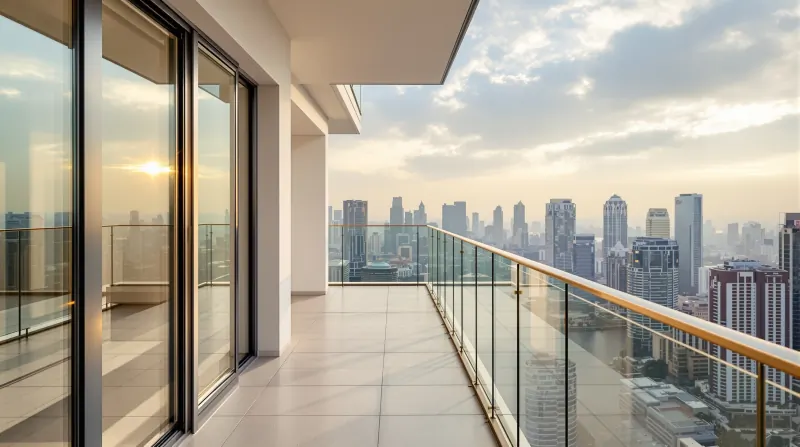
Glass railings and balustrades deserve particular attention because they are simultaneously glass elements and fall-prevention barriers. For a complete guide to compliance requirements, minimum heights, load calculations, and installation standards, see our detailed Glass Railings Singapore: Complete Compliance and Safety Guide.
No Free-Standing Cantilever Balustrades
Singapore regulators take a strict position — similar to Australia — against fully free-standing glass balustrades without interlinking handrails. The intent is that a guard must remain safe after glass breakage, preventing fall-through. For a deeper look at barrier heights, gap limits, and the full BCA compliance framework, see our Glass Railings Singapore compliance guide.
Post-Breakage Performance
For laminated glass balustrades, Singapore building authorities are working toward requirements that the broken laminate still resists design lateral loads with limited deflection — within approximately 150mm at 1.5kN/m with all glass plies broken. Advanced ionomer-based structural interlayers in triple-layer heat-strengthened laminates are increasingly specified to achieve this standard.
Safety Glass Types For Railings
Local guidance is unambiguous: glass railings must use safety glass — tempered or laminated — and plain annealed monolithic panels are not acceptable. For high-rise residential and commercial buildings, glass railings must also comply with BCA rules on:
- Minimum barrier height
- Horizontal load resistance (minimum 0.74kN/m at handrail height per BCA)
- Anchorage to slab or structure
- Gap sizes and climbability
- Post-breakage retention
For balcony, staircase, terrace and void-edge railings, the proposal should clearly describe the full barrier system: glass build-up, interlayer type, support channel or posts, handrail, base fixing, waterproofing interface and engineer/QP review where required.
SS 654:2020+A1:2023 — Curtain Wall Code Of Practice
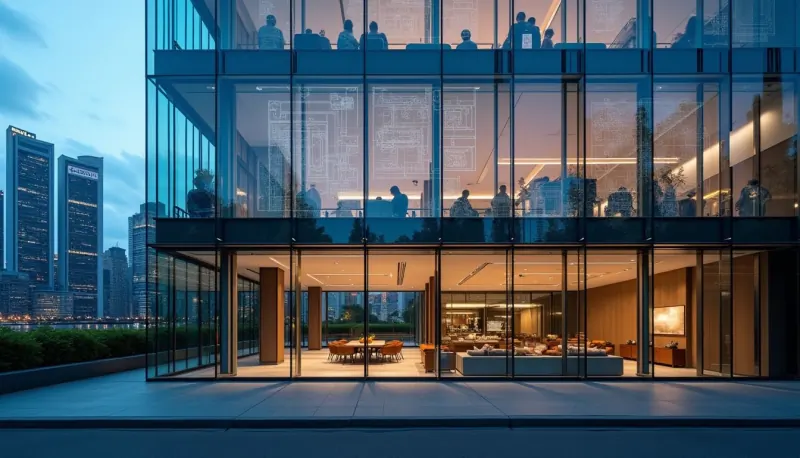
For facade and curtain wall projects, SS 654:2020+A1:2023 is a key Singapore reference. SS 654 specifies materials and performance standards for metal-framed curtain walls and provides requirements and good practices for design and installation. Its performance scope includes tests for:
- Air permeability
- Water-tightness
- Structural performance
The standard covers brackets, anchors, flashings, gutters, copings, secondary steel frames and all other components necessary for proper curtain wall construction outside the main structural frame. For facade glazing or curtain wall works, the specification should address water-tightness, air leakage, wind pressure resistance, bracket design, anchor suitability, drainage paths, sealant compatibility and installation tolerances. A visually clean facade can still fail if the support, drainage or movement details are poorly specified.
Wind Loading: SS EN 1991-1-4 And The Singapore National Annex
Glass facades, curtain walls, high-level windows and external glass panels must be checked against wind loading. BCA introduced Eurocodes as Singapore's mandatory building codes from 1 April 2013, with full withdrawal of British Standards from 1 April 2015. For wind actions, SS EN 1991-1-4:2009 is Singapore's identical implementation of EN 1991-1-4:2005. The Singapore National Annex includes important local adjustments:
- Terrain categories from EN 1991-1-4 are not directly applicable in Singapore
- All structures are designed using rural/country terrain (Category II) for simplicity
- Low-rise roof structures up to 25m height within 2km from the sea coast use terrain Category 0 (sea) to safeguard against uplift forces
For external glass panels, do not size glass using generic rules of thumb. Wind pressure depends on building height, location, edge zones, terrain assumptions, panel size and support conditions.
Fire-Rated Glass Requirements
Where Fire-Rated Glass Is Required
The Fire Code mandates fire-rated construction in:
- Escape stairs and lobbies
- Protected corridors
- Compartment walls between tenancies
- Service shafts and risers
- Smoke barriers and atrium edges
Understanding E And I Ratings
Fire-rated glass is classified by:
- E (Integrity): Resistance to flame and hot gas penetration
- I (Insulation): Limit on heat transfer to the unexposed face
- Time (minutes): 30, 60, 90, or 120 minutes typical
For example, E60/I60 glass maintains both integrity and insulation for 60 minutes — typical for commercial escape corridors.
Accepted Test Standards
SCDF and BCA accept fire-rated glass tested under:
- BS 476 Part 22
- EN 1364 / EN 1634
- ASTM E119
Each system must be supported by certification from SAC-accredited laboratories and submitted with building plan applications. Fire-rated glass must be treated as a complete tested system. The fire rating depends not only on the glass pane but also on the frame, beads, seals, fixings, hardware and installation method. Changing any component can void the fire certification.
Acoustic Glass And ISO 22897:2023
For hotels, offices, clinics and residential units near roads or MRT lines, acoustic performance may be part of the glass specification. ISO 22897:2023 covers glass in buildings for glazing and airborne sound insulation, providing a method to determine and assess sound insulation performance of glass products used in glazed assemblies. However, the standard notes that the final sound insulation of a complete window can change because of frame design, glazing method, mounting method and air tightness — not only the glass pane itself. If acoustic comfort is important, specify the full window or partition system rather than the glass pane alone. For a practical guide to specifying, installing, and budgeting acoustic glazing in Singapore — including STC targets, frame sealing, and retrofit options — see our Acoustic Glazing Singapore pillar page.
Common Mistakes In Singapore Glass Projects
Treating Glass Thickness As The Only Safety Factor
Thickness matters, but glass type, support condition, panel size, edge quality, interlayer, load duration and installation tolerance all affect safety.
Using Tempered Glass Where Laminated Glass Is Needed
Tempered glass can be strong pre-breakage, but a monolithic tempered panel may lose its barrier function once broken. For railings, overhead glazing and high-level facade locations, laminated safety glass is typically more appropriate.
Ignoring The Frame And Fixings
A glass panel is only as reliable as its support system. Brackets, anchors, channels, posts, gaskets and sealants must be compatible with design loads and site conditions. For guidance on selecting Grade 316 stainless steel clamps, spigots, and standoffs for Singapore conditions, see our Stainless Steel Glass Supports hardware guide.
Assuming Fire-Rated Glass Works Like Normal Glass
Fire-rated glazing must be installed exactly as a tested system. Changing the frame, sealant, bead, glass size or hardware can affect the fire rating.
Not Checking Submission Requirements
For glass works affecting safety barriers, facade performance or fire safety, the project team should confirm whether QP endorsement, plan submission or structural calculations are required before fabrication or installation.
Compliance Checklist For Glass Contractors In Singapore
Before Design
- Classify glass function: structural, barrier, facade, fire-rated, acoustic or decorative
- Map applicable codes: Building Control Act, Fire Code, SS 653, SS 654, SS EN 1991-1-4
- Confirm submission requirements with QP
During Design And Specification
- Specify safety glazing per SS 653 in all human-impact zones
- Avoid free-standing glass balustrades; design for post-breakage integrity
- Match fire-rated glass E/I ratings to Fire Code requirements
- Check wind loading per SS EN 1991-1-4 with Singapore National Annex
- Address curtain wall performance per SS 654 where applicable
Before Installation
- Collect lab certifications (BS, EN, ASTM) for fire-rated and safety glass systems
- Show glass type, interlayer, thickness and fixing details on shop drawings
- Verify that fire-rated systems match tested configurations exactly
- Engage installers familiar with BCA and SCDF compliance workflows
Frequently Asked Questions
Is tempered glass mandatory for all glass railings in Singapore?
Glass railings must use safety glass — tempered, laminated, or laminated tempered glass. Plain annealed glass is not acceptable for railings due to human impact and fall risks under SS 653 and BCA guidance.
What is SS 653:2020?
SS 653:2020 is Singapore's Code of Practice for glazing in buildings, focused on safety related to human impact. It specifies where safety glazing is required to reduce injuries from glass breakage.
Do I need fire-rated glass for office partitions?
Only when the partition forms part of fire compartmentation, an escape corridor, or a separation required by the Fire Code. Decorative partitions away from escape routes generally do not need fire-rated glass, but still require safety glazing under SS 653 if in a human-impact zone.
What fire rating is required for a commercial escape corridor?
Most commercial escape corridors in Singapore require glass with E60/I60 or higher, but the exact requirement depends on the building's use, height and compartmentation strategy under the Fire Code.
Are free-standing glass balustrades allowed in Singapore?
Fully free-standing glass balustrades without an interlinking handrail are strongly discouraged. Designs must demonstrate that the guard remains safe after glass breakage, typically using laminated heat-strengthened glass with structural interlayers.
What standard applies to curtain walls in Singapore?
SS 654:2020+A1:2023 is the Singapore code of practice for curtain walls, covering materials, performance standards, design and installation requirements for metal-framed systems.
Planning an architectural glass project?
See the engineering and architectural resource page, then submit the real project scope, drawings and site constraints for review.
View glass engineering resources